The Problem with "Baiting": Why Ecotours Uses Only Natural Attractants
The pursuit of the perfect wildlife photograph, the ultimate close encounter, or the guarantee of a rare sighting drives a multi-billion dollar ecotourism industry. Yet, for conservation organizations, environmental journalists, and ethical tour operators, this pursuit presents a profound ethical dilemma: how do we ensure the act of observation does not compromise the welfare and natural behaviour of the very creatures we seek to admire?
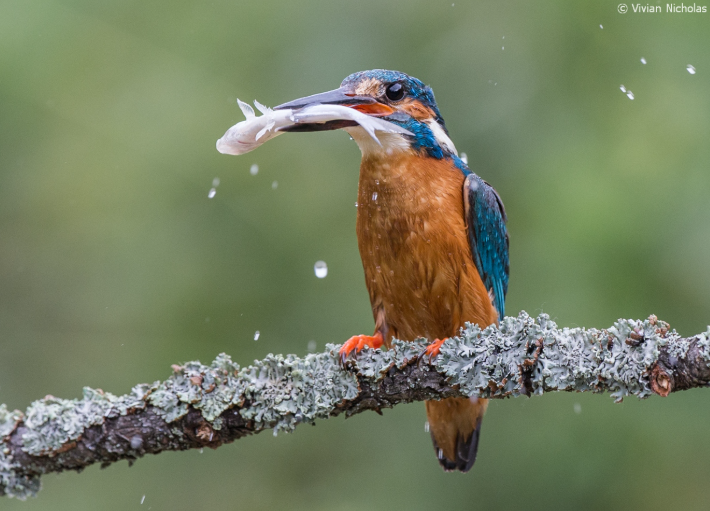
The answer hinges on the critical distinction between using natural attractants—techniques that harness existing ecological processes—and the use of baiting—the deliberate introduction of artificial food or other lures to manipulate an animal's movement or behaviour for tourism gain. This distinction is the cornerstone of the ethical framework that separates genuine, responsible ecotourism operators from predatory "cowboy" counterparts.
For areas teeming with highly sought-after species, such as endangered raptors, elusive mammals, or specialized insect life, the use of baiting offers a fast, guaranteed return for the tourist dollar. However, this convenience comes at a devastating cost: the potential disruption of natural behaviour, the spread of disease, the risk of habituation, and the long-term erosion of an animal's ability to survive in the wild.
This article, aimed at Environmental News outlets, BirdLife Partners, and Conservation NGOs, outlines the stringent ethical code applied by responsible Ecotours operations and highlights why "baiting" is a fundamentally flawed and dangerous practice that must be rejected for the long-term health of our planet’s biodiversity.
🚩 The Fundamental Flaw: Defining and Rejecting Baiting
Baiting, in the context of wildlife tourism, refers to the intentional provisioning of food or other substances (e.g., calling devices, synthetic scents) to draw wild animals closer to observers or photographers than they would naturally venture. While its practitioners argue it minimizes search time and guarantees sightings, conservation science proves that its negative consequences far outweigh any perceived benefit.
https://ecotourswildlife.co.uk/
The Ethical Framework of Responsible Ecotourism
Ethical operators, often working in close partnership with scientific bodies and park authorities (like BirdLife Partners or MME, the Hungarian Association for Ornithology and Nature Conservation), operate under the principle of Non-Interference. Their goal is to capture the wildness of nature, not its manipulation. This framework is anchored in three non-negotiable standards:
-
Observing Natural Behaviour: The priority is the welfare of the animal and the integrity of its natural conduct. Any action that alters an animal's feeding, breeding, resting, or migration patterns is strictly forbidden.
-
Maintaining Natural Fear (Wildness): Responsible operators strive to ensure animals maintain their natural wariness of humans. Habituation—the loss of this fear due to positive reinforcement (like food)—is an existential threat, increasing vulnerability to predation, persecution, and human-wildlife conflict.
-
Ecological Integrity: All viewing practices must support, not disrupt, the local ecosystem. This means respecting natural predator-prey relationships, food chains, and carrying capacity, avoiding the introduction of foreign substances or artificial population concentrations.
Why Baiting Violates Every Ethical Standard
Baiting acts as a direct violation of all three principles, creating a cascading series of negative ecological and behavioural effects:
Negative ConsequenceEcological ImpactHabituation and DependencyAnimals lose their natural fear of humans, associating them with a guaranteed food source. This leads to dependency and reduced foraging efficiency in natural settings.Altered Species DistributionBaiting can unnaturally concentrate populations, leading to localized overgrazing, increased competition, and displacement of non-target or shyer species.Disease TransmissionConcentrating animals at a single, shared food source significantly increases the risk of spreading pathogens, such as avian influenza or other communicable diseases.Aggression and Social DisruptionProvisioned food can trigger abnormal competitive behaviours and aggression, disrupting established social hierarchies and normal group dynamics.Increased Human-Wildlife ConflictHabituated animals, particularly mammals and large raptors, may become nuisances or threats to local communities, leading to lethal retaliatory action (e.g., illegal culling or poisoning).
🔍 The Responsible Alternative: Harnessing Natural Attractants
Ethical Ecotours operators rely exclusively on techniques that align with natural processes. These methods require deep ecological knowledge, patience, and a commitment to accepting that sightings are a privilege, not a guarantee.
1. Habitat Management and Restoration
Instead of luring wildlife, responsible operators focus on supporting and enhancing the natural habitat.
-
Example: Instead of baiting for owls, operators invest in planting native tree species that attract the owl's natural rodent prey, or install specific nesting boxes in optimal locations. The sighting is then dependent on the owl’s naturally successful hunting efforts within a healthy ecosystem.
-
The Ethical Link: This directly supports the long-term conservation goals of NGOs by ensuring the entire ecosystem is thriving, not just the target species.
2. Strategic Placement of Hides and Blinds
Observation is conducted from carefully engineered, stationary, permanent hides or blinds. These are positioned based on long-term ecological data regarding natural feeding routes, roosting sites, or migration corridors.
-
Example: Hides might be placed along a known raptor flight path or near a natural water source where animals congregate naturally, ensuring the humans remain concealed and their presence is not perceived as a disruption.
-
The Ethical Link: The animals approach the area because of natural resources, not human inducement. The hides mitigate human impact, adhering to the "Leave No Trace" philosophy.
3. Utilizing Ecological Events (Natural Phenomena)
Ethical tours prioritize natural, seasonal events where wildlife congregations are predictable and part of the normal annual cycle.
-
Example: Observing mass bird migration bottlenecks, or witnessing the rut of large herbivores. In the case of raptors, this might mean observing them exploiting natural thermals or hunting over traditional grassland that has been recently grazed by natural herbivores (such as traditional Hungarian Grey Cattle, where the grazing creates optimal hunting conditions).
-
The Ethical Link: This teaches tourists about the intricate ecological calendar and the forces that govern wildlife movement, offering a genuine, interpretive experience.
4. The Limited Use of 'Vulture Restaurants' (Supplemental Feeding)
In highly specific and carefully controlled conservation programs, such as the winter feeding of endangered raptors (e.g., Eastern Imperial Eagles, Saker Falcons) managed by BirdLife Partners, food is provided. Crucially, this is not tourism "baiting," but a scientific, monitored conservation intervention.
-
The Difference: The goal is survival augmentation, not tourist photos. The sites are remote, access is strictly limited, the food is certified and non-toxic, and the entire operation is overseen by ornithologists.
-
The Tourism Role: Tourists are permitted to view from specially constructed hides only to generate funds that cover the operational costs, without which the conservation program would fail. The process is transparent, scientifically justified, and the antithesis of profit-driven baiting.
😈 The 'Cowboy' Operator: Exploiting Vulnerability
The unethical "cowboy" operator uses baiting techniques because they are cheap, easy, and guarantee a photograph, appealing to uneducated or unscrupulous clients. They often market guaranteed sightings of elusive species through highly deceptive practices:
Unethical PracticeConsequences for WildlifeRoadside FeedingPlacing bait next to roads for ease of access (e.g., using mice or roadkill for falcons).Unapproved Calling DevicesUsing electronic calls or playback of territorial/distress calls (especially for owls or rare songbirds).Inappropriate BaitUsing non-local, toxic, or diseased meat, or food scraps (e.g., bread for waterfowl).Bait-and-FlushPlacing bait and then actively approaching the animal to flush it for flight shots.
For conservation organizations, exposing these practices is not just an ethical matter, but a necessity for species protection. The short-term economic gain of the 'cowboy' operation directly undercuts the sustained, resource-intensive conservation efforts of NGOs.
🌐 A Call to Action for Environmental Stewardship
The global conservation community—including every BirdLife Partner, every environmental journalist, and every eco-conscious traveler—must take a firm stand against baiting. Responsible tourism provides critical funding and public support; baiting undermines the very nature it seeks to profit from.
The choice of tour operator is, therefore, a powerful act of Environmental Stewardship. By promoting and supporting Ecotours that adhere to a framework of Non-Interference and rely solely on natural attractants and habitat management, we ensure that:
-
Funds are directed towards habitat enhancement and scientific monitoring.
-
Wildlife remains wild, retaining its natural fear and survival skills.
-
The visitor experience is rooted in genuine ecological understanding, not cheap spectacle.
We urge all stakeholders to utilize the ethical framework detailed above to vet operators, report unscrupulous "cowboy" practices, and advocate for stronger, enforceable regulations against the manipulation of wildlife for commercial gain. The integrity of our natural world is too high a price to pay for a guaranteed photograph.
The future of conservation lies in sustainable, respectful engagement. Let us choose to be stewards, not exploiters, of the Earth’s magnificent wild inhabitants.